
How to start an oil painting
- artstudioangela

- Feb 15, 2020
- 3 min read
The most difficult strokes to make in an oil painting are the first and last strokes. The first strokes because you may not know where to start and the last strokes because you may not know when to stop. This post is all about how to start an oil painting to help you make those first strokes. The Glaring White Canvas
The glaring white canvas tends to be an intimidating force. As Vincent van Gogh once said: "The canvas has an idiotic stare and mesmerizes some painters so much that they turn into idiots themselves." (must love van Gogh) The longer you leave the glaring white canvas on your easel, bare of any paint, the more intimidating it becomes.So, the most important step to starting an oil painting is to just start! Make those first few strokes and attack the white canvas. The easiest way to kill the white canvas is to stain the canvas or do an underpainting.
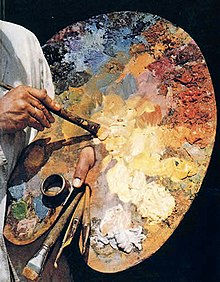
Staining The Canvas I start most of my oil paintings by staining the canvas with an earth tone such as raw umber. I do this by taking raw umber and smearing it directly on the canvas from the tube. I then use a cheap cloth dabbed in some odorless solvent to wipe the paint all over the canvas. The result is a coffee-stained appearance which is much less confronting to paint on.Sometimes I will use this process to warm up my hands and get a feel for the composition. I can make inconsequential strokes with my brush to help get a feel for where things will be positioned. Then I will wipe the canvas down so that there is no excess build-up of paint. I want this layer to be thin so that it dries quickly.I do not mind if there are different textures and brush markings on the canvas as this creates an interesting surface to paint on, especially if I am painting a landscape. If you were to paint a realistic portrait, then you may want to ensure you have a more smooth and consistent surface. Identifying The Critical Reference Points In Your Painting Once I have stained the canvas, I will usually let that dry for about 30 minutes. It does not need to be dry to the touch.I will then map out the critical reference points in the painting. These are important structural points which will help me with the rest of the drawing.These are examples of critical reference points: The horizon line; The edge of a cliff; The top of a building; or The peak of the tree line.Once I have identified these points, I can use them as references to map out where everything else is positioned. This is done by comparing the relative distances between elements.For example, say I am painting a landscape and I am trying to work out where to position the clouds in the sky. I could do this by first identifying the horizon line (a critical reference point). Then I can observe where the clouds are located relative to the top of my painting and the horizon line. If the clouds start about half-way between the top of the painting and the horizon line, then that is where I will paint them.These critical reference points are extremely important and you should take care in identifying them correctly in your painting. If you position a reference point in the wrong place, then this will negatively impact the rest of your painting.
Turning Those Reference Points Into A Drawing

Now that you have some critical reference points, you should be able to start turning those reference points into a drawing.The drawing you do will depend on the complexity of the painting. If you were to paint an intricate still life, then you may want to use a lot more detail than if you were to paint an impressionist landscape.The drawing should build on the reference points and start identifying important shapes, lines and any other details. But remember, you will be painting over this so you do not need to include every single detail in your drawing.
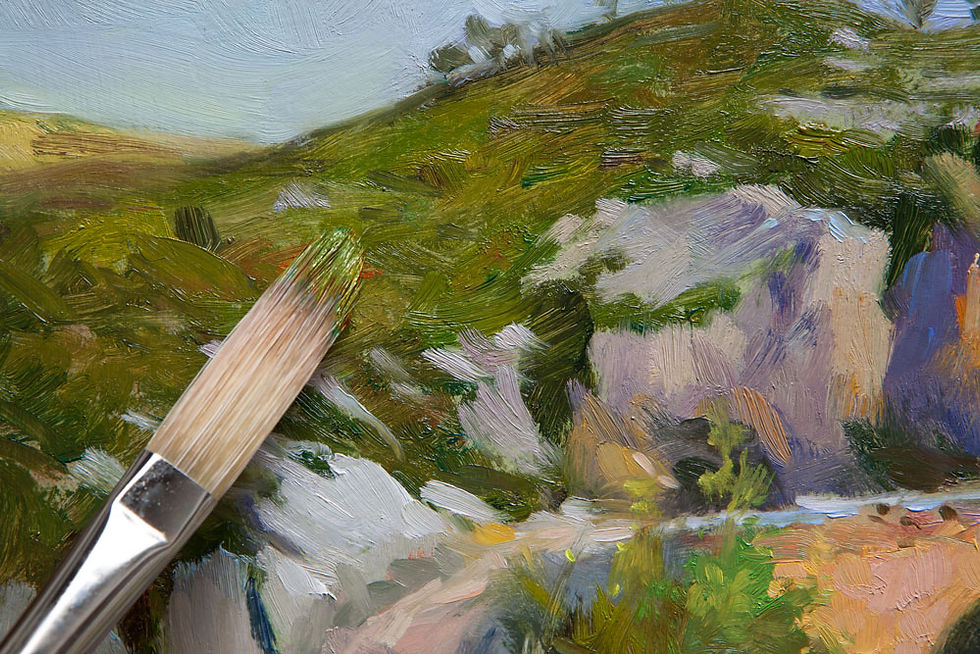
The Different Ways To Progress From Here
At this point you have the canvas stained, the critical reference points identified and the initial drawing complete. There are a number of different ways you can proceed.If you are painting alla prima, then you can start painting directly ontop of your drawing. If you are using a more traditional approach such as glazing, then you may want to complete a more detailed underpainting. After this I go over and build up texture and detail, leaving some areas exposed in the finished painting to produce an element of depth.


Comments